D.E. Filters Explained: Recharging and Why Backwashing Matters
A D.E. filter catches very fine dirt, but only while its grids wear a fresh coat of powder.
October 27, 2026 · 4 min read
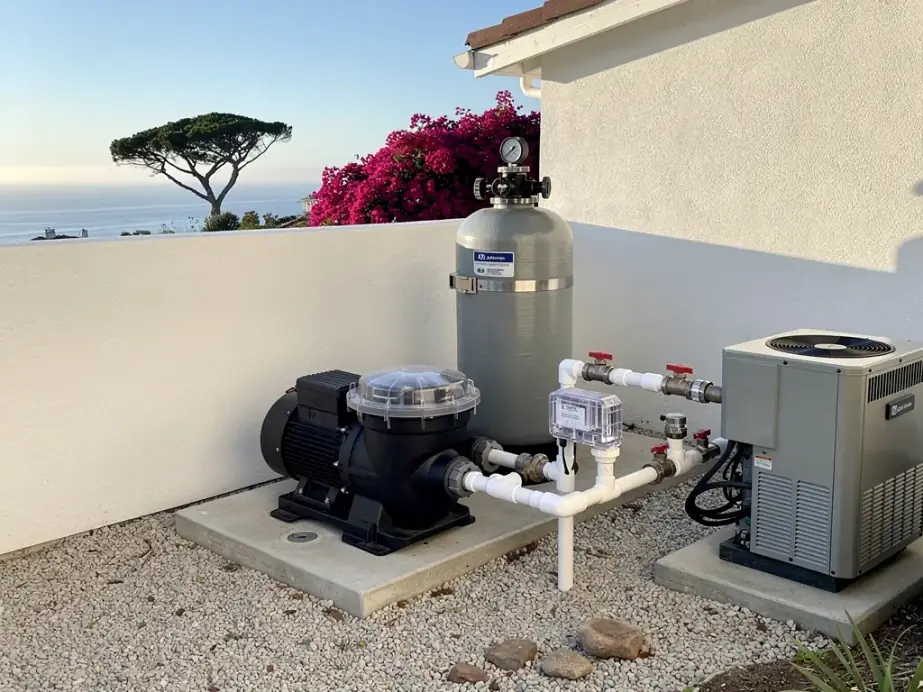
If you have a pool filter tank on your equipment pad with a pressure gauge on top and a multiport valve on the side, there's a fair chance it's a D.E. filter. D.E. stands for diatomaceous earth, a fine, chalky white powder. It isn't a gimmick or an add-on. It's the working surface of the filter, and a step on Zach's Pool Service's weekly checklist reads "Recharge the D.E. filter with diatomaceous earth, if applicable." Here's what that means and why it comes up so often.
How a D.E. filter works
Inside the tank are a set of grids, sometimes called fingers or elements, covered in fabric. The pump pushes pool water through the tank, and the water has to pass through the fabric on those grids to get back to the pool. Left bare, the fabric would catch only the larger debris. When the powder is added, it builds a thin coat over the grids, and that coat is what traps very fine particles that would otherwise stay in the water and make it look dull or cloudy.
As the filter works, the coat slowly fills with the dirt it has caught. Water has a harder time passing through, so the pressure on the gauge goes up and the flow back to the pool goes down. That's the signal that the filter needs cleaning, and it's the reason the pressure gauge is worth a glance when you walk past the equipment.
What recharging means
Backwashing reverses the flow of water through the filter and sends the loaded powder and trapped dirt out through a waste line. It cleans the grids, but it also takes the powder coat with it. A filter that has just been backwashed has bare grids, so it has to be recharged: fresh diatomaceous earth is added, usually through the skimmer, and the circulating water carries it into the tank where it settles onto the grids and forms a new coat.
That's why backwashing and recharging show up as separate, linked steps. Backwashing alone leaves the pool with a filter that can't do its fine work. Recharging without backwashing first adds fresh powder on top of a coat that's already full. They belong together, and the order matters.
Why backwashing matters, and why more isn't better
Backwashing at the right time keeps flow steady and the water clear. Waiting too long lets the pressure climb, the pump work harder and circulation drop. A pool with weak circulation holds on to debris, and chemicals don't spread evenly through it.
Backwashing too often has its own costs. Every backwash sends water down the waste line and uses up a charge of powder, and a filter that's cleaned before it needs it is wasting both. The goal is to backwash when the filter has actually loaded up, not on a calendar for its own sake. A weekly visit is a practical rhythm because the technician can look at the pressure, see how it compares with the clean starting number, and decide on the spot.
What an owner can watch for
- The pressure gauge. Notice what it reads right after a clean and recharge, then notice if it's well above that number later in the week.
- Weak return flow. If the jets at the pool wall feel softer than usual, the filter, a full basket or a clogged impeller may be the cause.
- Cloudy or dull water that doesn't clear after a day or two.
- A pump that sounds strained, or air bubbles at the returns.
- White powder coming back into the pool. That is the one to take seriously.
Powder in the pool after a recharge is normal for a short while as it circulates, but if you keep seeing it, a grid may be torn or a fitting inside the tank may have failed. A damaged grid can't hold a coat, so the powder passes straight through. That's a repair, not something more backwashing will fix, and it's the kind of job covered under pool and spa repairs.
A few handling notes
Diatomaceous earth is a fine dust, and it's best not to breathe it in, so it's added carefully and not poured in a cloud. Used powder shouldn't be washed into a garden bed or a storm drain, and where backwash water goes on your property is worth knowing. If you're not sure how your waste line is set up, ask Zach next time he's there instead of guessing.
The multiport valve on the side of the tank has several positions, and an owner who turns it while the pump is running can damage it. If something looks off, it's better to leave the handle alone and call. The valve's o-rings and the lid of the tank are also part of the maintenance steps on the checklist: "Lubricate o-rings, unclog impellers, and/or adjust valves." A dry or flattened o-ring on the filter lid can let air in or leak, and a pump lid is the same story.
Why this is worth doing on a schedule
A D.E. filter is one of the finest filters a residential pool can have, but only when it's maintained. Left alone, it clogs, then it strains the pump, then the water turns. A short check and clean every week keeps it from drifting that way. It also means a problem like a torn grid shows up as a small, early finding and not as a pool that's been green for ten days.
If your filter pressure keeps climbing or your water won't clear, call Zach's Pool Service at (619) 678-2240 or send a note through the contact page.
Zach's Pool Service, (619) 678-2240
Call (619) 678-2240More articles
What Actually Happens on a Weekly Pool Service Visit
Eleven small jobs, done in a set order, are the reason a pool looks effortless by the time you walk out to it.
Why Salt System Cells Scale Up, and When They Need Cleaning
The white crust on a salt cell is mineral scale, and it's one reason a salt pool can still run low on chlorine.