Why Salt System Cells Scale Up, and When They Need Cleaning
The white crust on a salt cell is mineral scale, and it's one reason a salt pool can still run low on chlorine.
October 27, 2026 · 4 min read
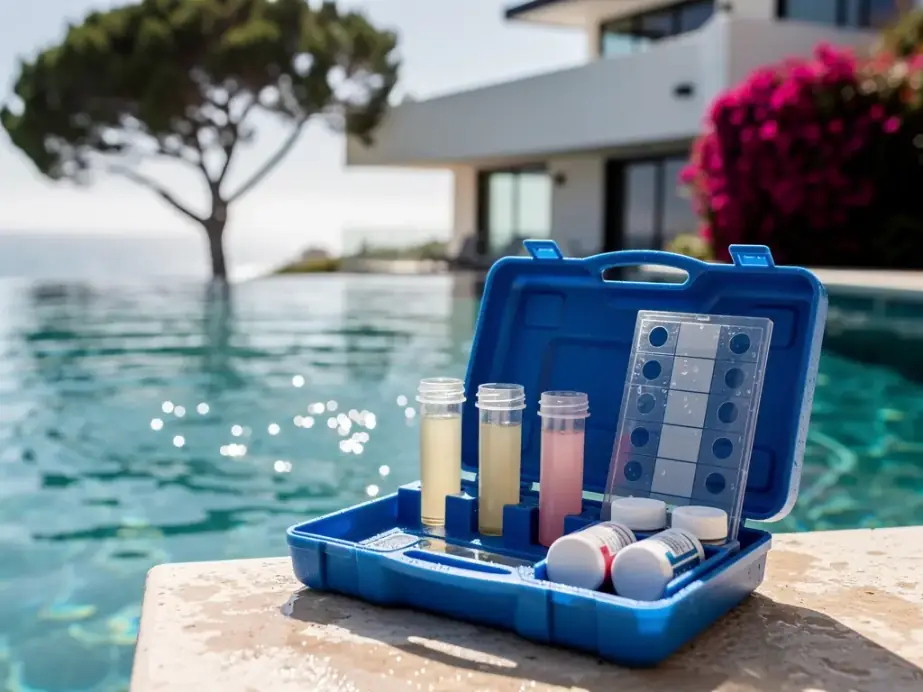
A salt pool isn't a pool without chlorine. It's a pool that makes its own. The salt system, often called a salt chlorine generator, turns dissolved salt in the water into chlorine as the water flows through a part called the cell. That cell is the one piece of the system that wears out, scales up and needs hands-on attention, which is why Zach's Pool Service includes it in the weekly visit as "Clean salt system cell if applicable, and on an as-needed basis."
What the cell does
The cell is a clear housing with a set of thin metal plates inside. Water passes over the plates while a low electrical charge runs through them, and that reaction splits the dissolved salt and produces chlorine. The chlorine does its work in the pool, sanitizing the water, and then it breaks back down into salt and the process starts again. That's why a salt pool doesn't need salt added all the time, only after water is lost through splash-out, backwashing or heavy rain.
Why the plates scale
Pool water carries dissolved minerals, and calcium is the usual one behind scale. The reaction at the plates raises the pH of the thin layer of water right against them, and in that layer calcium can drop out of solution and stick to the plates as a hard, white or gray crust. Water that's naturally hard, or water whose pH has drifted upward, makes it happen faster. Warm water makes it a bit easier too.
As scale thickens, less of the plate surface touches the water. The cell keeps running and the control box may show that it's on, but it makes less chlorine than it should. A lot of owners notice the result before they ever notice the scale: algae starts to show up at the corners, the water loses its sparkle, and the test shows low chlorine even though the system seems to be doing its job.
Why cleaning is as needed, not on a schedule
It might seem like a good idea to clean the cell every visit, but that isn't how it works. The plates have a special coating, and every cleaning takes a small toll on it. A cell that gets scrubbed or soaked more often than it needs shortens its own life, and a replacement cell is one of the more expensive parts of a salt system. So the better approach is the one on the checklist: look at the cell, and clean it when there's something to clean.
In practice that means checking the cell when the water chemistry or the system's own indicators suggest scale, and looking through the clear housing for white deposits between the plates. When there are deposits, the cell is cleaned following the manufacturer's directions for that model. Plates are not scraped with tools, because scratching the coating can ruin a good cell. The cleaning solution is a strong acid mix, which is another reason it's a technician's job and not something to improvise with a bucket of household cleaner.
Water balance is what slows scale down
Cleaning treats scale after it forms. Water balance is what decides how fast it forms. When pH is kept in range and calcium doesn't build up unchecked, the plates stay cleaner longer and the cell needs attention less often. That's one reason the weekly visit begins with "Check chemical balance of pool" and ends with "Implement chemicals." The salt cell and the water chemistry are linked, and a pool that gets steady attention to the second tends to be easier on the first.
Salt level matters too. If the salt in the water is too low, the cell can't make enough chlorine, and if it's too high, the system can shut down or wear faster. The right number depends on the cell model, so it's something to check against the manufacturer's range and not something to guess at or top up by eye.
What you can watch for between visits
- A white or gray crust you can see through the cell housing.
- A warning light or message on the control box. Check your manual for what it means, and tell Zach what it said.
- Chlorine that tests low even though the system is running.
- Water that looks dull, or a green tint starting at the corners and steps.
- A leak or damp spot around the cell unions. The cell is held in by fittings with o-rings, and those need the same lubricating care as the rest of the equipment.
If the control box is set to a high output to make up for a scaled cell, you might get fine results for a week and then see them fall apart. Turning the dial up isn't a fix. It makes the cell work harder on plates that are already coated, and it can shorten the cell's life further.
A salt cell isn't set and forget
Salt systems have a reputation for being easy, and compared with hauling chlorine around, they often are. But the cell, the flow switch, the pump and the water chemistry all depend on each other. A weak pump pulling less flow, a skimmer basket packed with leaves, or a filter that needs backwashing can each make the cell's job harder, or trigger a low flow warning. Looking at the whole system each week, as the checklist does, is what keeps a small issue small.
If your salt system's light is flashing or your chlorine keeps testing low, call Zach's Pool Service at (619) 678-2240 or reach out through the contact page.
Zach's Pool Service, (619) 678-2240
Call (619) 678-2240More articles
What Actually Happens on a Weekly Pool Service Visit
Eleven small jobs, done in a set order, are the reason a pool looks effortless by the time you walk out to it.
D.E. Filters Explained: Recharging and Why Backwashing Matters
A D.E. filter catches very fine dirt, but only while its grids wear a fresh coat of powder.